
Make-Ready Engineering & Pole Loading Analysis
Every aerial fiber route runs through poles somebody else owns, and every one of them needs a loading analysis before you can attach. We turn field survey data into pass/fail results and the make-ready drawings that follow.
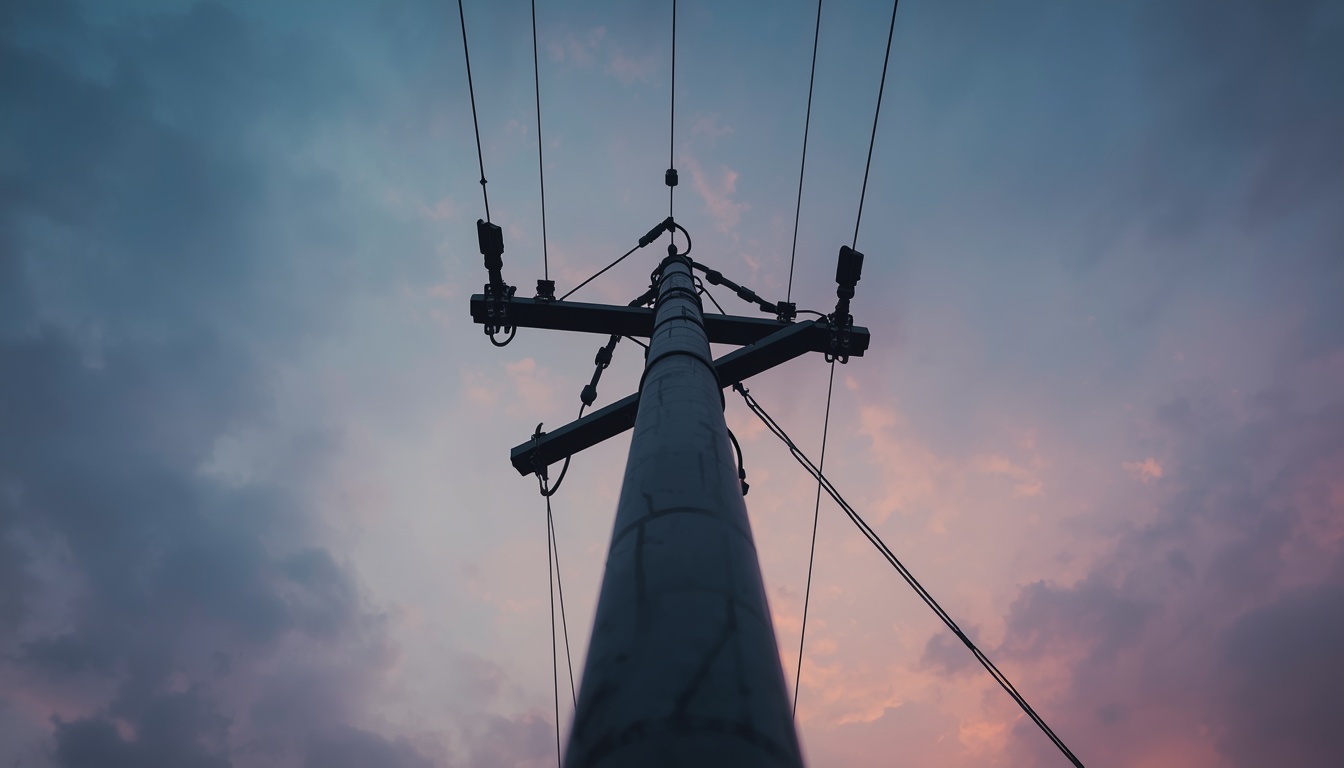

Concrete deliverables, not vague promises.
Structural analysis
- Pole loading analysis to NESC loading criteria for the applicable district
- Pass/fail determination per structure with governing failure mode identified
- Proposed-condition modeling with the new attachment applied
- Guy and anchor adequacy assessment, with new guying designed where required
- Pole replacement recommendations with specified class and height
Make-ready documentation
- Make-ready construction drawings and framing details
- Attachment height and clearance exhibits
- Existing-versus-proposed attachment diagrams
- Structure-by-structure make-ready schedules
- Make-ready cost estimating support
Submission packages
- Analysis reports formatted to the pole owner's submission requirements
- Attachment application exhibits
- Field survey data reconciliation and quality review
Field survey data in whatever collector format your crews use: pole inventory, attachment heights, span lengths, framing, existing equipment, photos. We also work from raw photographs plus measurements where formal survey data isn't available, and we'll flag which structures need re-visiting.
Codes & standards
NESC (ANSI C2) loading districts and clearance requirements, GO 95 for California, and pole-owner-specific standards where the owner publishes them. FCC one-touch make-ready and self-help rules inform how we structure submissions where they apply.
Full service engineering design. Delivered remotely.
- 01
Start with a bounded request
Send what you have — sketches, GIS/CAD files, pole data, spreadsheets. A named engineer reviews it and confirms a scoping timetable.
- 02
Agree scope, standards & criteria
Work begins once a written SOW sets deliverables, assumptions, standards and who owns each engineering decision.
- 03
Produce with visible controls
Assumptions, RFIs and progress are logged as they happen, not buried inside the drawing set.
- 04
Independent QA & handoff
A second reviewer checks the package against the SOW before a revision-tracked transmittal ships.
Fiber builders and ISPs attaching to existing utility infrastructure
Engineering firms absorbing high-volume loading analysis on aerial builds
Pole owners and utilities processing third-party attachment applications
Turnkey construction contractors delivering design-build fiber programs
Does the analysis need a PE seal?
It depends on the pole owner and the jurisdiction. Many owners accept an analysis report without a seal; some require one. We produce the analysis and the full report; where a seal is required, the package is prepared for your engineer of record to review and stamp. Confirm the owner's requirement before work starts and we'll build the deliverable to match.
What survey quality do you need?
Better survey data means fewer assumptions and fewer conservative failures. Photographs and measured heights are workable; a full collector export with framing details is better. We'll tell you which structures the data can't support a determination on.
Can you handle volume?
Yes, this service is built for it. Loading analysis is high-count repetitive work with a defined method, which is exactly the shape of work a distributed team absorbs well. Volume pricing applies above defined structure counts.
Have a make-ready engineering & pole loading analysis project to scope?
A sketch, a photo, a spreadsheet: send what you have and we’ll take it from there.