

Full Service Design.
Delivered Remotely.
We turn hand sketches, marked-up maps and rough spreadsheets into professional, standards-compliant engineering deliverables across FTTx & Telecom and Energy & Renewables.
Two specialist practices. One accountable remote delivery team.
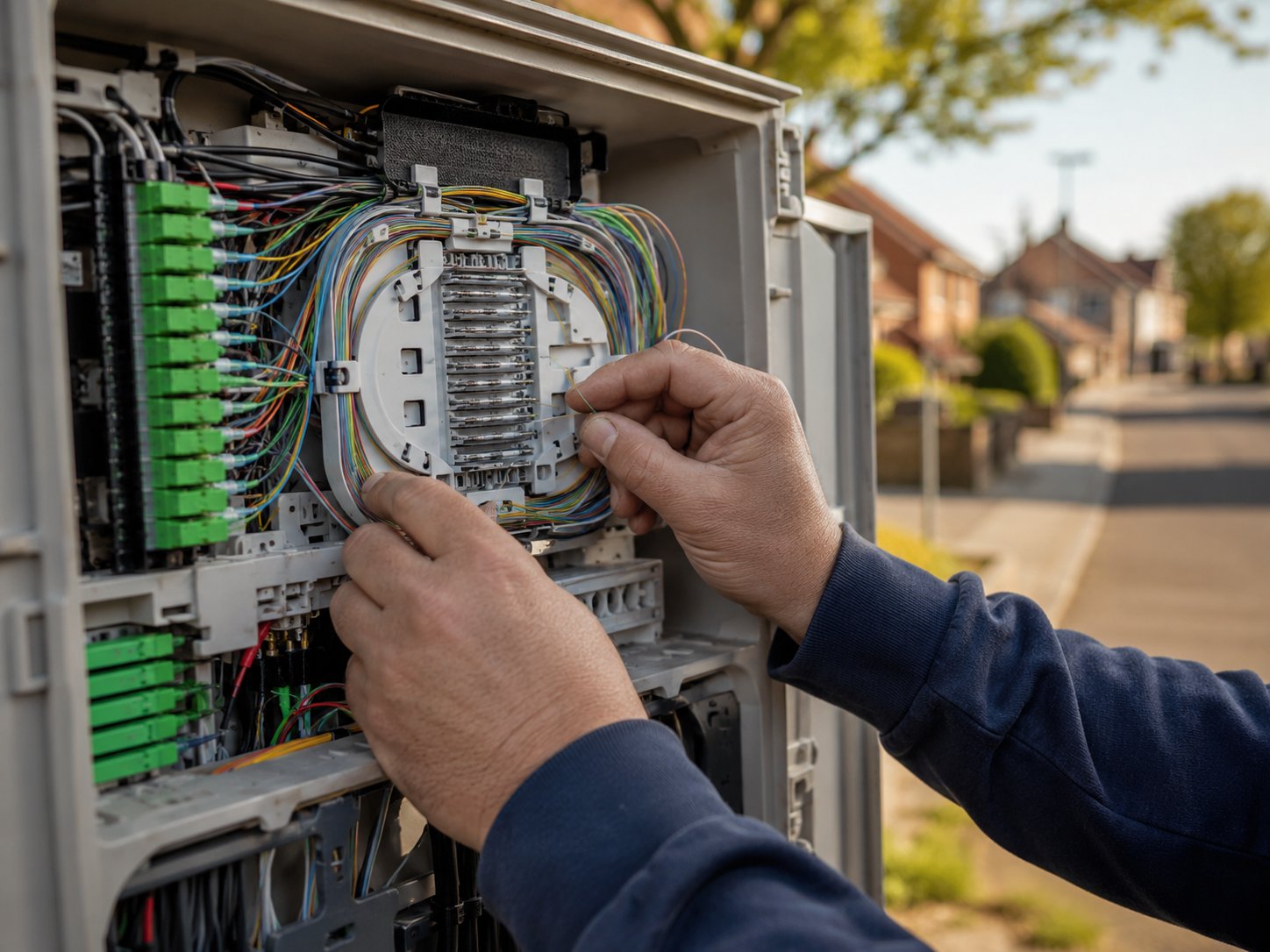

OSP & FTTx Network Design
High-Level and Low-Level Design, outside- and inside-plant drafting, splicing and BOM/BOQ documentation, and construction support for GPON, XGS-PON and point-to-point networks.
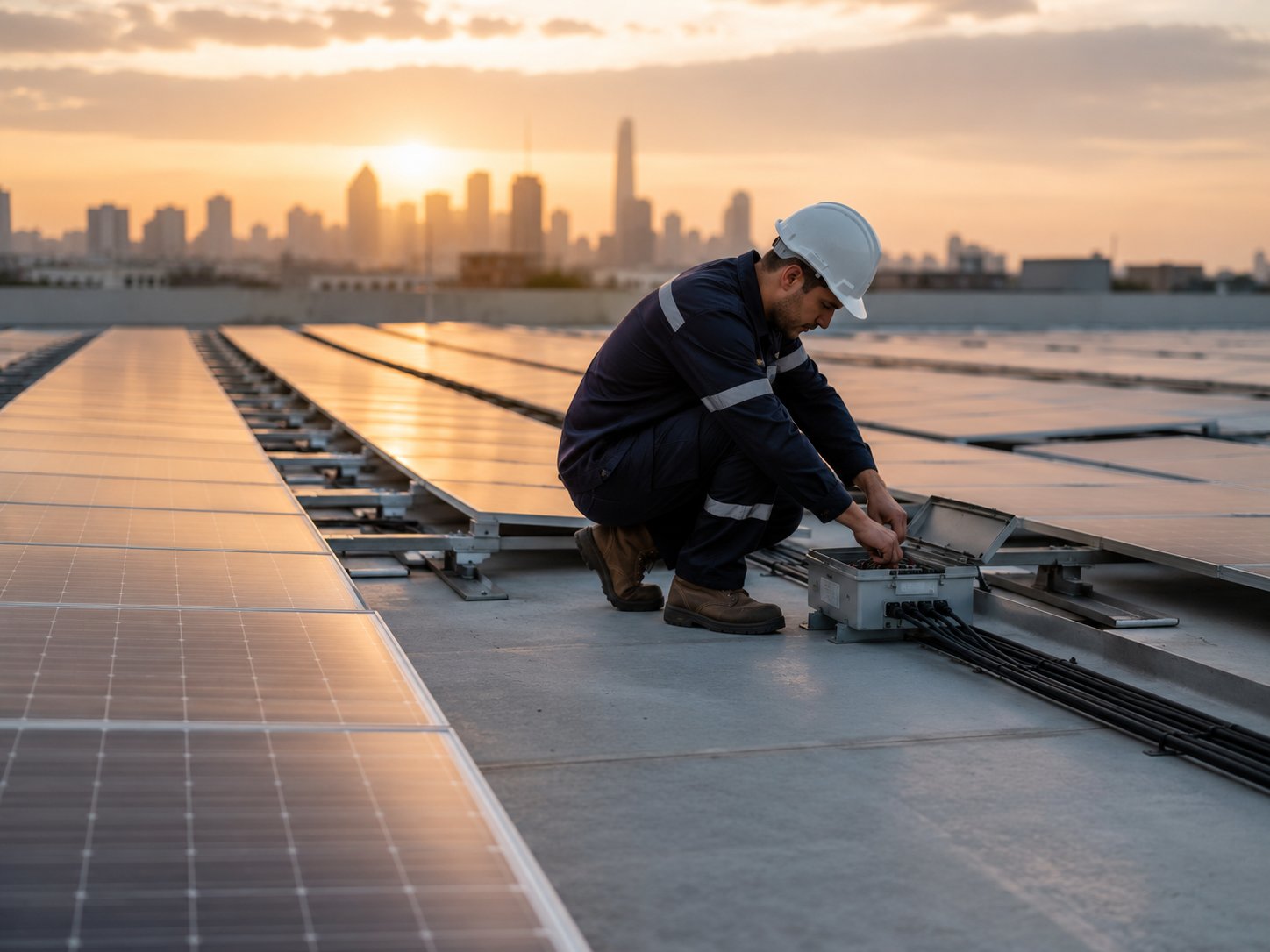

Renewable Energy & Solar PV
Solar PV site layouts, PVsyst yield simulations, single-line diagrams, BESS layouts, and grid-connection and permitting documentation.
Built for firms that need confidentiality and scale
Full service engineering design. Delivered remotely.
- 01
Start with a bounded request
Send what you have — sketches, GIS/CAD files, pole data, spreadsheets. A named engineer reviews it and confirms a scoping timetable.
- 02
Agree scope, standards & criteria
Work begins once a written SOW sets deliverables, assumptions, standards and who owns each engineering decision.
- 03
Produce with visible controls
Assumptions, RFIs and progress are logged as they happen, not buried inside the drawing set.
- 04
Independent QA & handoff
A second reviewer checks the package against the SOW before a revision-tracked transmittal ships.
Work with us the way that fits your pipeline.
Per-Project
Fixed scope, fixed price, per task or drawing package. Quoted within 12 hours of your request: ideal for a single design, a permit package, or clearing a specific backlog item.
Retainer
Reserved monthly capacity (hours or deliverable volume) with priority turnaround. Built for teams with an ongoing design and drafting pipeline.
Both paths end in a scoped quotation prepared by our team. Pricing is confirmed during scoping, not published up front.
Greenfield FTTH design for 500 homes, full OSP package from plat to BOM
Built to standard US ILEC/CLEC practice: a two-stage 1:4/1:8 split localizes fault response to a single FDT instead of the whole feeder, construction runs underground-first to meet HOA aesthetic requirements, and 20–30% spare fiber is held at every tier so the network can absorb infill lots without a re-trench. The design closes with 7.4 dB of optical margin against the 28 dB GPON Class B+ budget, enough headroom for a future 1:64 upgrade at a subset of FDTs.
- Input received
- The subdivision plat with lot layout and home count (~4 homes/acre), the target GPON architecture, and local joint-trench and AHJ burial requirements.
- Delivered
- A complete outside-plant design: two-stage centralized/distributed GPON topology (FDH/FDT), civil route and handhole plan, fiber count and splice architecture by tier, a cumulative optical link budget, and a procurement-ready bill of materials.
- Timeline
- Scoped in 2 hours, delivered in 2 business days.
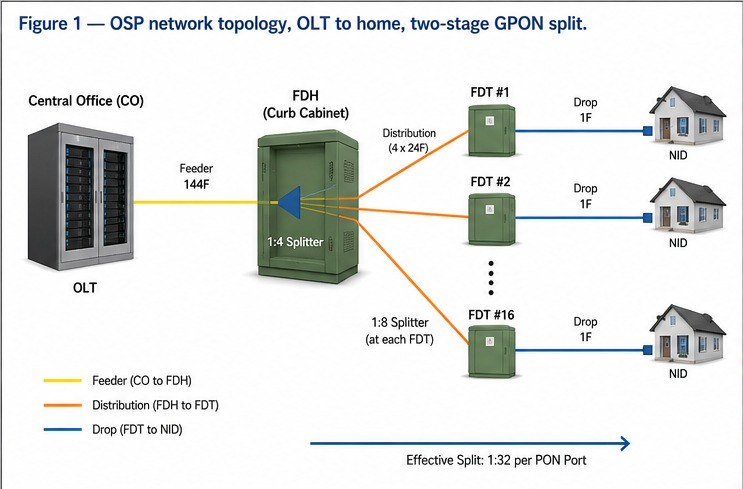
144F feeder cable, gel-filled loose tube, 3.6 km run
1:4 splitter: first-stage split, feeds 4 distribution legs
1:8 splitter per FDT: 16 FDTs across the subdivision
1 fiber per home, 500 homes passed, 1:32 effective split

A global delivery model built around your working day.
Close of day
Inputs and decisions are handed over
Next work window
Progress is ready for review
Continuity across working days
Agreed handoff windows keep work moving across time zones, with progress ready for the next client review cycle.
One accountable partner, not a patchwork of freelancers
A single delivery team, internally managed and quality-checked, stands behind every deliverable, not a marketplace of disconnected contractors.
Local requirements, global delivery
Units, standards, currencies and communication protocols are set for each market and engagement from the outset.
Field-tested notes on design, drafting and delivery.
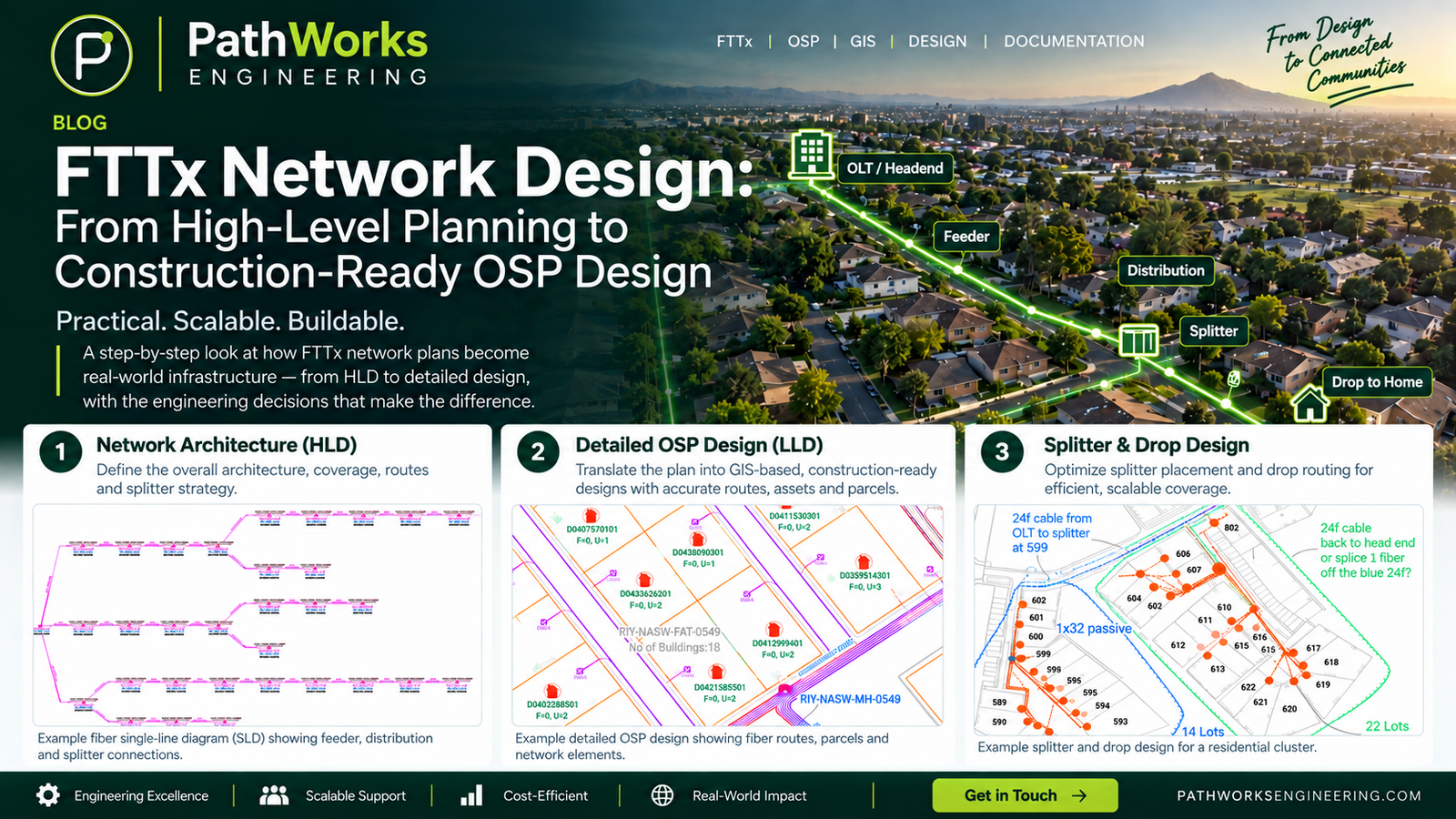
FTTx Network Design: From HLD to Construction-Ready OSP Engineering
A practical guide to FTTx network design, covering HLD, LLD, splitter planning, fiber topology, BOQ development, QA/QC and construction-ready OSP documentation.
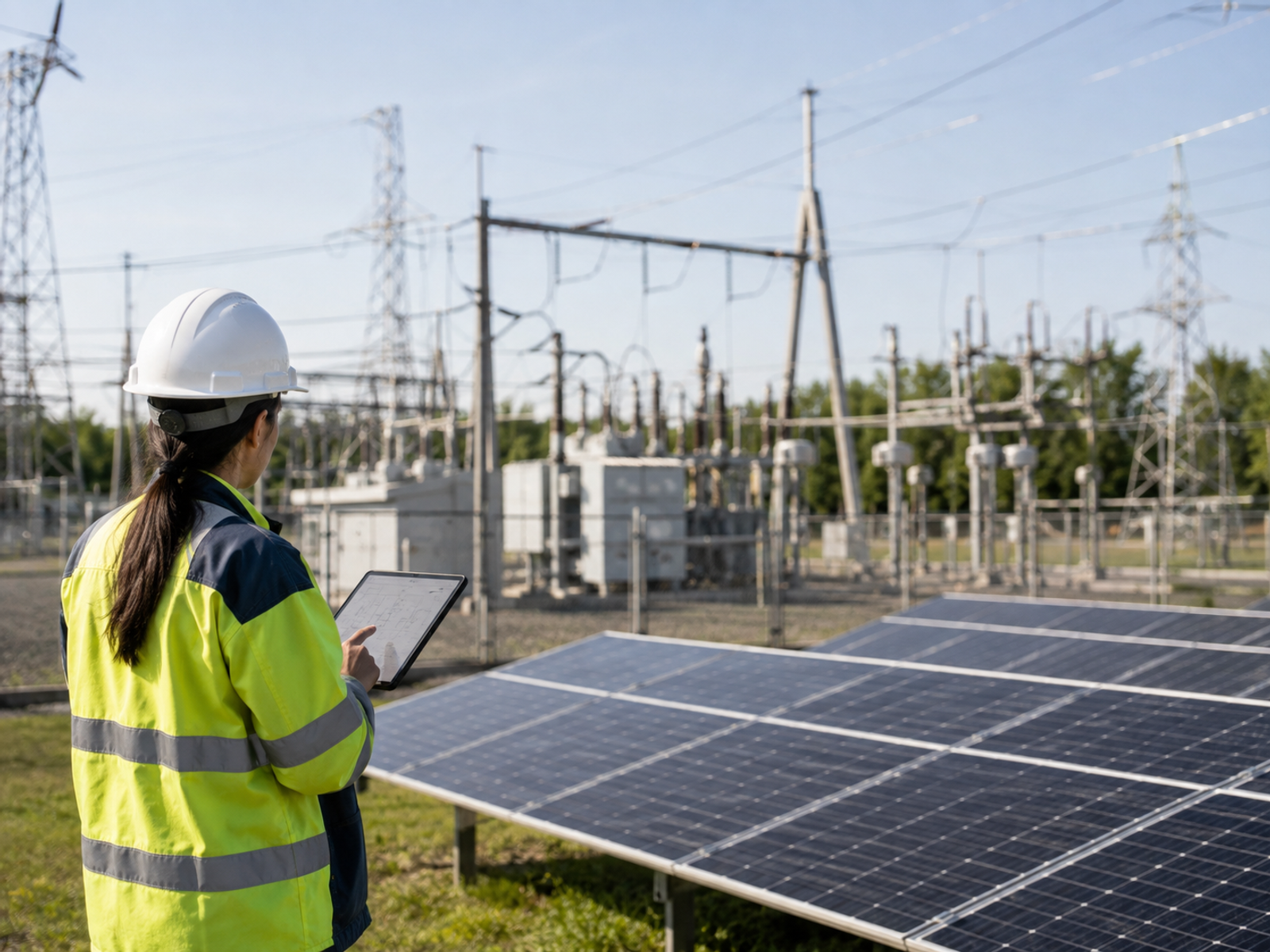
Interconnection Studies: What Changes Between a Behind-the-Meter System and a Utility-Scale One
A behind-the-meter interconnection study and a utility-scale one aren't the same analysis at different sizes. Here's what actually changes between them.
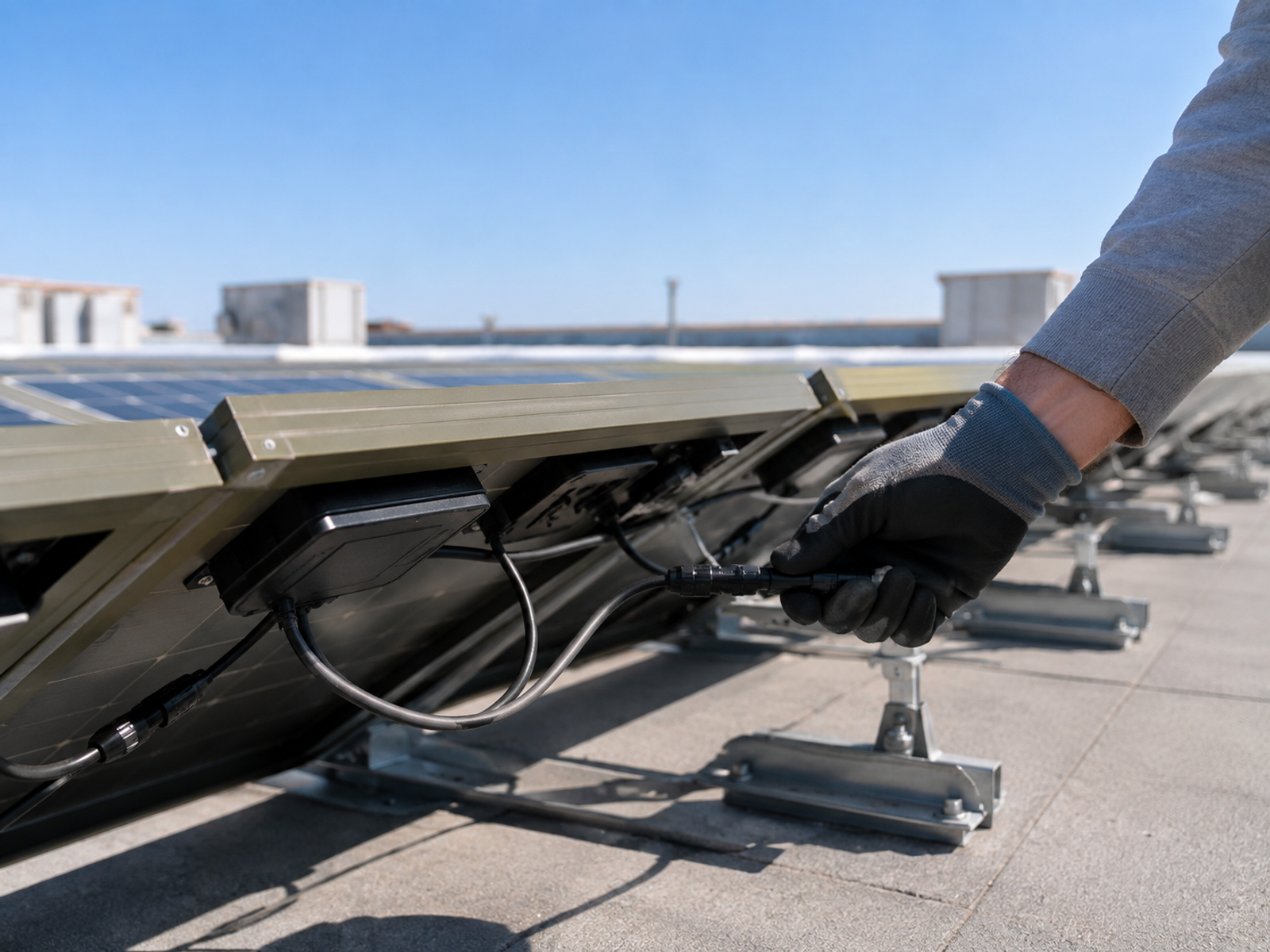
String Sizing for PV Arrays: Why the Temperature Coefficient Is the Number That Actually Constrains the Design
The datasheet's STC rating isn't the number that constrains a string design. The temperature coefficient is, and getting it wrong trips inverters on the coldest morning of the year.